The National Debt Is Crushing Us. AI and Robots Might Be the Only Realistic Fix
AI GENERATED / JEREMY CURATED

A lot of people are tired of hearing about AI. They're worried it will take their jobs, make the rich richer, or create some dystopian mess. Those fears are understandable. But here's the uncomfortable truth: AI — together with advanced robots — may be the single best opportunity we have to fix America's crushing national debt, make universal basic income actually work, and open the door to a real age of abundance.
The problem almost nobody talks about simply enough
The U.S. government has been spending more money than it takes in for a long time. To cover the difference, it borrows. The total amount it currently owes is about $40 trillion.
Think of it like a household that has maxed out every credit card and keeps opening new ones. The government has to pay interest on all that borrowed money — just like you pay interest on a credit card. Right now those interest payments are around $1 trillion a year. That is more than the entire military budget.
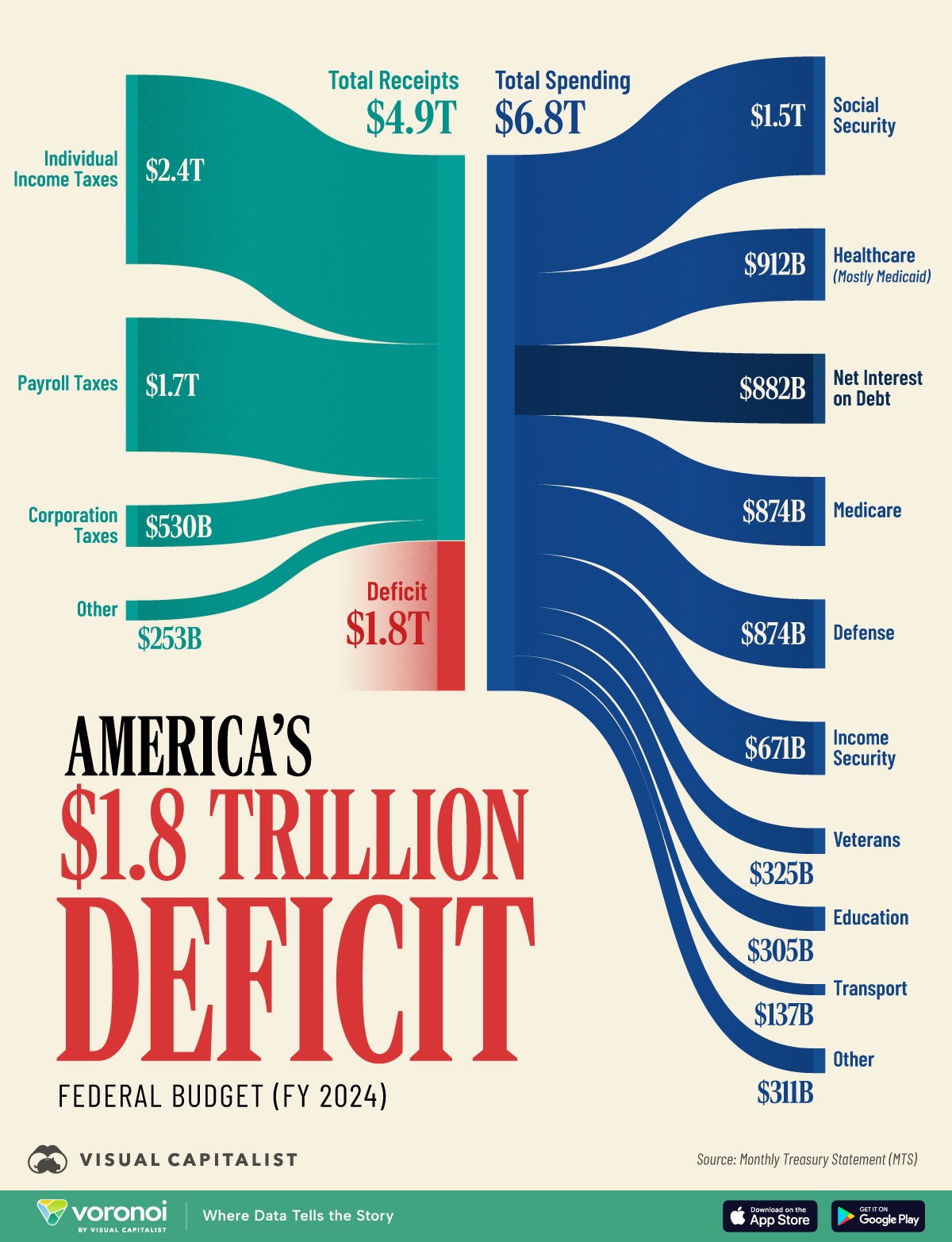
This is why the debt is so high: years of spending more than we collected, an aging population that needs more support, wars, emergencies, and the simple fact that cutting popular programs or raising taxes is politically hard for any side.
How AI and robots can actually shrink the debt problem
AI and advanced robots can dramatically increase how much the country produces. Factories that run themselves. Software that writes itself. Design, logistics, construction, and physical work done by machines that don't get tired.
When the economy grows much faster, two good things happen:
- The debt becomes a smaller percentage of the total economic pie.
- Tax revenue rises even without raising tax rates, because there's simply more activity to tax.
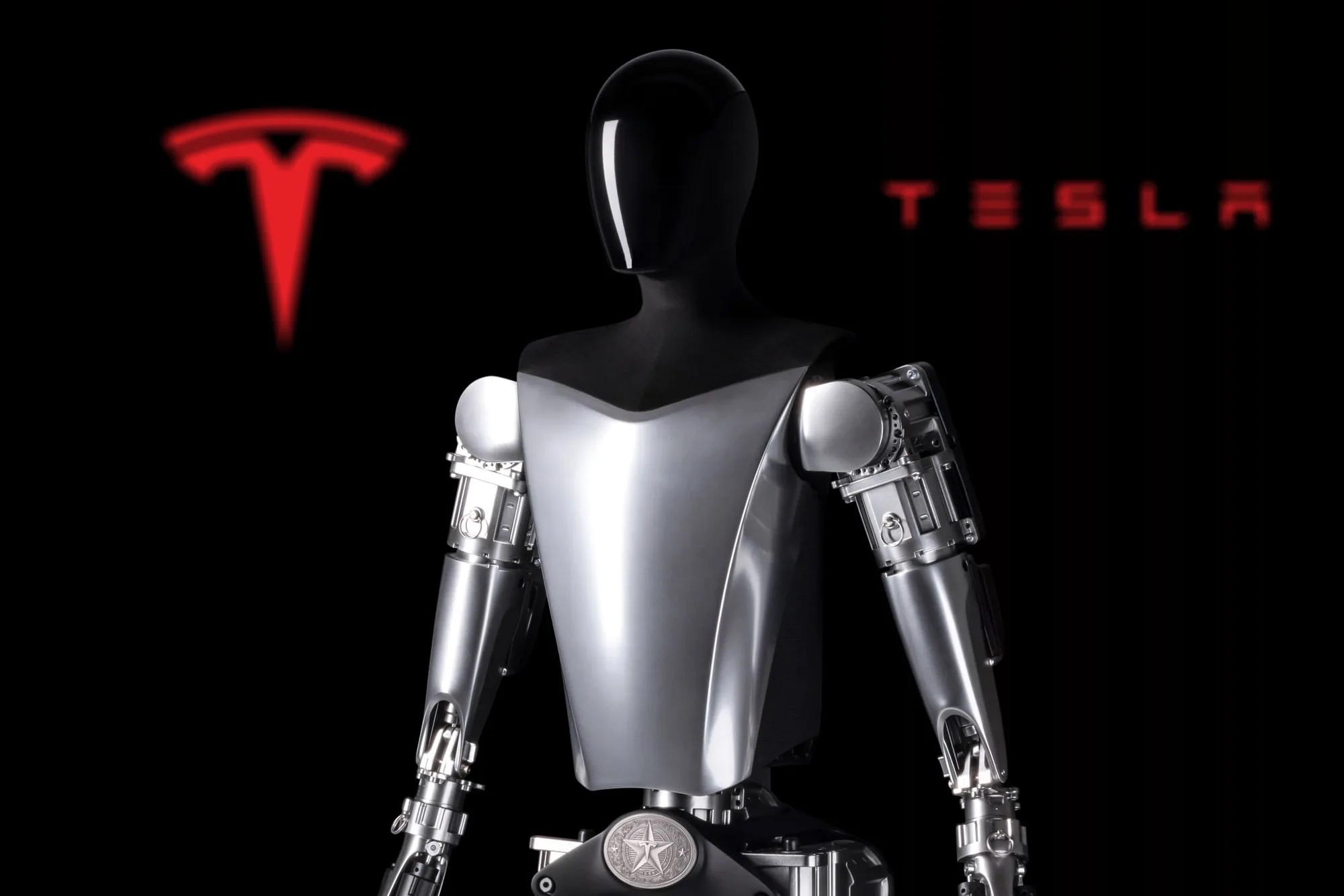
Elon Musk has said AI and robotics at large scale are "pretty much the only thing that's going to solve for the US debt crisis."
Without a huge jump in productivity, the math stays ugly. With it, the debt load becomes far more manageable.
The usual fixes are painful and limited
Without growing the economy, you have two options: spend less or tax more. Both are brutal.
Spending cuts hit programs voters depend on — Medicare, Social Security, defence, schools. Politicians who propose deep cuts lose elections. Tax increases push companies to move operations offshore, shrinking the tax base.
Both approaches squeeze more out of the same-sized economy. You're fighting over a fixed pie, creating endless political battles that often slow growth — making the debt ratio worse, not better.
What happens to regular jobs — and why we will need universal basic income
Once a robot with AI can do a job better than a person, it makes no economic sense for a company to pay more than the cost of running that robot. The labor savings can be enormous — no wages, no benefits, no time off, and output that scales without hiring. Businesses have to pursue these efficiencies to stay competitive. If one company automates and cuts costs, others must follow or lose market share.
As these systems get better, many traditional jobs will disappear or change. The country will be producing far more goods and services, but fewer people will be needed for paid work.
That's where universal basic income comes in. The government regularly sends people money so everyone can afford a decent life. Because the economy is producing so much more, these payments can be real and meaningful.
This is not communism
Universal basic income is not communism or socialism. Companies and individuals still own the robots, AI systems, and factories. Markets and competition still drive progress. People keep the freedom to spend their money and time however they choose.
The key difference: when robots can outproduce any human worker, allocating a share of that surplus to everyone becomes straightforward. Universal basic income is simply a way to distribute the enormous output machines create — not a system that seizes private property or eliminates markets.

The bigger prize: an age of abundance
The same technologies that grow the economy can do much more. AI is already helping to cure disease and optimize supply chains. At scale, it can speed up medical research in ways that make curing or preventing most diseases realistic. Scientific discovery itself accelerates. New materials, better energy sources, and even new physics become more reachable. Robots can build housing, infrastructure, and cities at a scale and speed that was previously impossible. The real cost of living can fall sharply.
Musk has described this future as an "age of amazing abundance" where anyone can have essentially whatever they can think of. In that world, the old pressure of "I need money to survive" fades. He has said that saving for retirement in the conventional way becomes much less important because the material problem is largely solved.

The realistic path forward
Plenty of people are weary of AI — and some of that caution is healthy. But if we get this right, AI and robotics are not just another tech wave. They are the most realistic way to climb out of a dangerous debt situation, make broad income support actually affordable, and open the door to a world where most people no longer have to worry about money the way we do today.
That future is not guaranteed. It requires building the technology carefully and spreading the benefits widely. But among the options in front of us, it is the one with the highest chance of turning a serious problem into a temporary chapter on the way to something far better.